Archaeology: Mapping the Battlefield
The Nations of Long Ago and Today
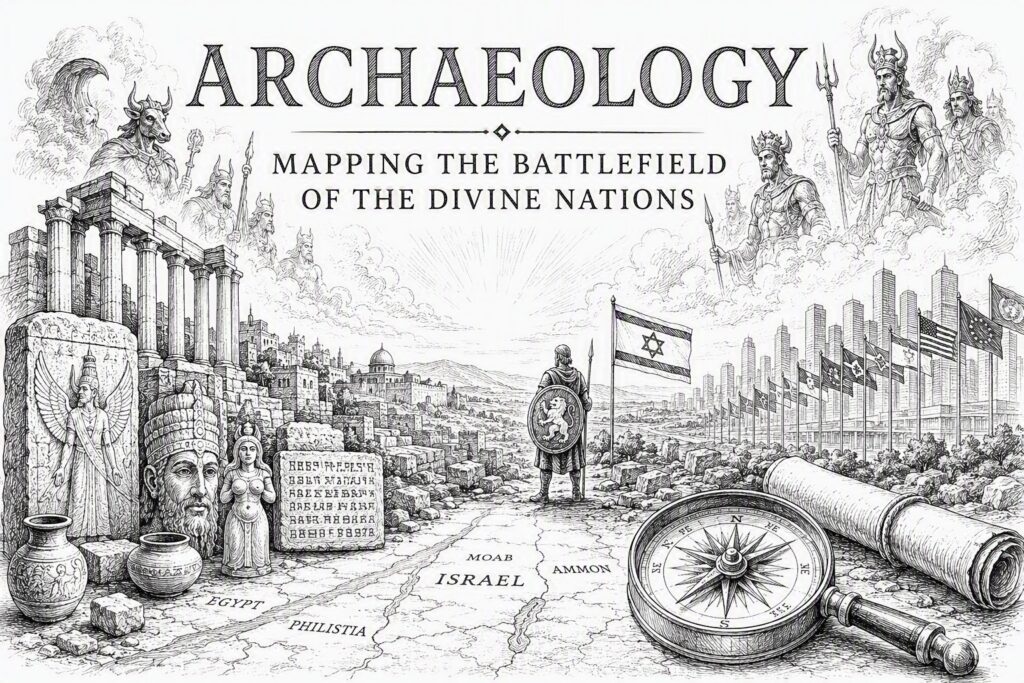
If we accept the worldview of Deuteronomy 32 and Psalm 82 as reality, archaeology becomes far more than a scientific study of ancient ruins. It becomes a way of mapping the battlefield upon which the biblical story unfolded and how it will unfold in the future.
Archaeology does not “prove” Yahweh, the divine council, or the existence of the Elohim assigned to the nations. Rather, it uncovers the physical artifacts of nations whose texts and monuments believed and acted upon those beliefs. It reveals the kingdoms, temples, cities, altars, inscriptions, and religious systems that formed and described the earthly dimension of a larger supernatural conflict.
The nations surrounding Israel did not view themselves as secular states. Moab belonged to Chemosh. The Philistines honored Dagon. The peoples of Canaan served Baal and Asherah. Archaeology has uncovered evidence of these cults in abundance: temples dedicated to their gods, inscriptions invoking their names, and artifacts used in their worship. The biblical writers were not speaking into a vacuum. They lived in a world where every nation believed itself connected to a divine patron.
Archaeology reveals how Israel struggled in this conflict. Excavations uncover evidence of Baal worship, high places, household idols, and other artifacts that were repeatedly condemned by Yahweh and revealed to the Jewish prophets.
Israel uniquely stands apart.
While all of the surrounding cultures produced images of their gods, Israel was commanded not to make an image of Yahweh. The reason was profound. Israel itself was called to be the image-bearing nation of the God who created all things including the rebel Elohim. The kings of Israel ruled under Yahweh’s authority, and Israel’s land was understood as God’s unique inheritance among the nations. These Nations were spoken of by Paul, their rulers, rebel in command and are not loyal to Yahweh. (Ephesians 6:12)
The Nations have Transcendent Loyalties
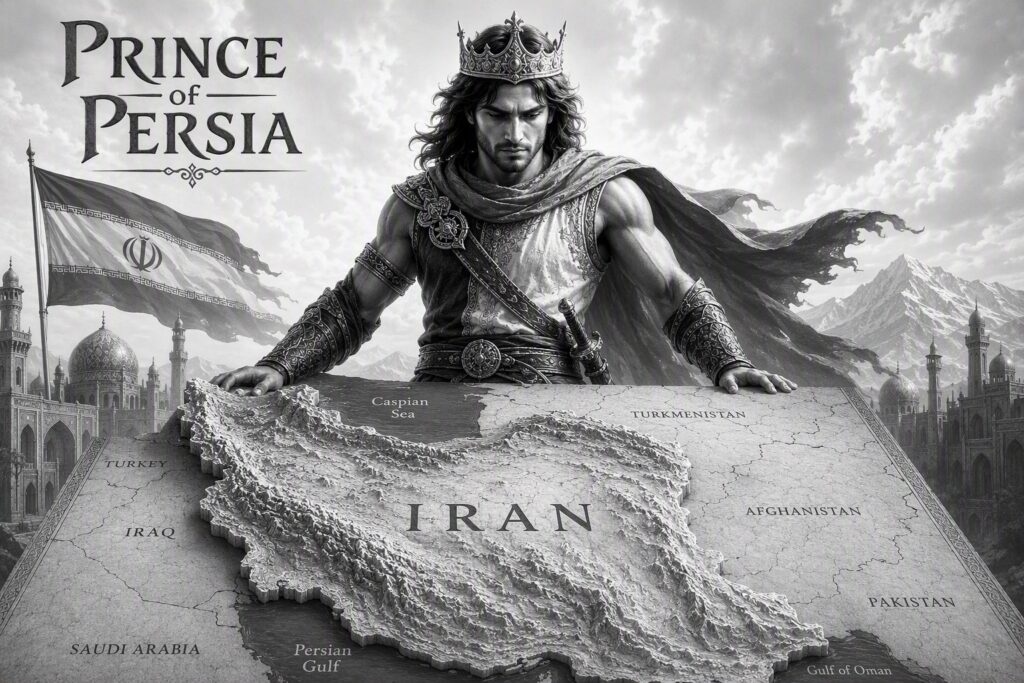
If the supernatural worldview of Psalm 82 remains operative, these “Sons of God.” may represent the powers behind the nations. The entities associated with the nations continue the ancient struggle for authority, influence, and dominion. They still fight “holy wars”. They compete with one another for power and control, yet their ultimate opposition is directed toward the sovereignty of Yahweh, the lordship of Jesus Christ, and the covenantal purpose embodied in national Israel. They are in terror of the final outcome. They cannot kill Yahweh but they seek to destroy His Nation Israel.
From this perspective, archaeology highlights a remarkable contrast between Israel and the nations. Even today everywhere around Biblical Israel stands the witness of competing religious systems and ancient hostilities. The archaeological record is a testimony to the very powers that the biblical narrative identifies as rivals to Yahweh’s rule.
Conclusion: The Ancient & Modern Fields of Battle
Archaeology serves as a unique bridge between the ancient and modern worlds. It uncovers the physical evidence of nations that openly identified themselves with particular gods, illuminating the biblical portrait of a world divided among spiritual powers. If the worldview of Deuteronomy 32 and Psalm 82 is accepted, then the archaeological record is more than a collection of ruins. It is a map of the earliest theaters of a conflict that continues into the present age.
The names, temples, and empires have changed, but the struggle for allegiance, authority, and worship remains. Modern nations may no longer proclaim devotion to Baal, Chemosh, or Dagon, yet they frequently rally around ideologies, practices, identities, and ultimate commitments that compete for the hearts of men and the direction of civilizations. Archaeology helps reveal where the conflict began, while current events reveal that it has never truly ended.
The same spiritual contest that once surrounded ancient Israel continues today on a global scale, culminating in opposition, hatred, fear and terror to the reign of Yahweh, the kingship of Jesus Christ, and the role of Israel within the biblical narrative.
The stones of antiquity therefore do more than tell us about the past. They remind us that the battle for authority among the nations is ongoing and moving inexorably toward the final triumph of the Yahweh over every competing power, principality, throne, and dominion.