Christian Allegory / Rabbinic Judaism and the Surrender of the Biblical Cosmic Worldview.
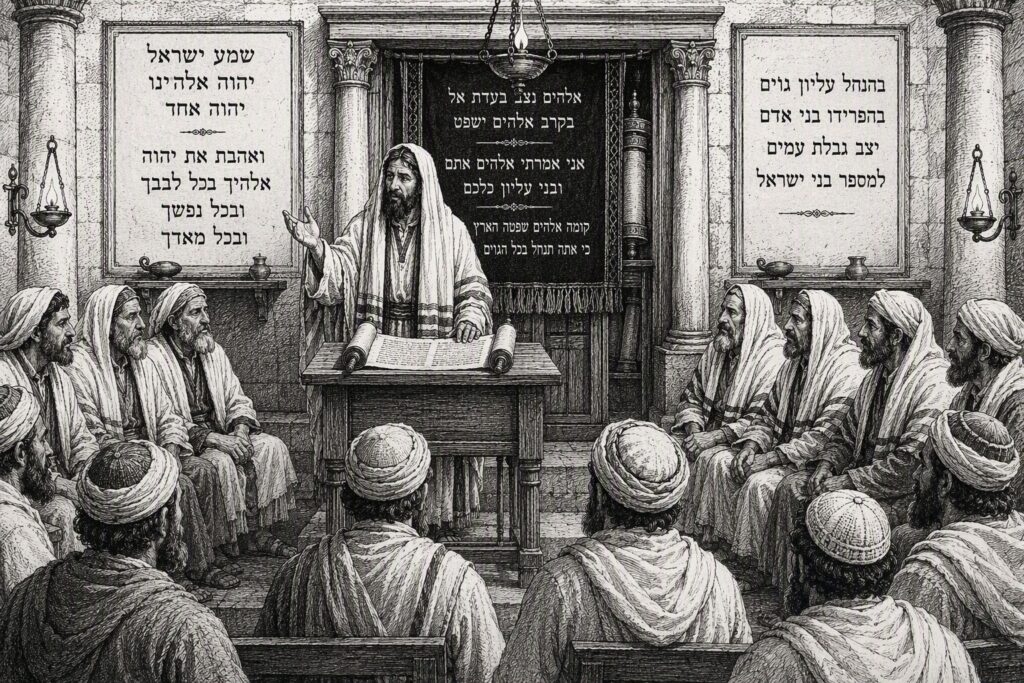
On Rabbinic Judaism
After the destruction of the Second Temple and the Jewish wars against Rome, Jewish leaders had strong reasons to present Jewish communities as peaceful, faithful, and committed to life under God’s and national law. As a result, themes related to the heavenly host gradually became less central in teaching and interpretation.
Rabbinic Judaism increasingly emphasized strict monotheism, Torah study, and covenant faithfulness, while passages concerning the heavenly host and divine council received less attention in later teaching traditions. ¹ Within this perspective, the angelic interpretation of Genesis 6 and the wider role of Yahweh’s promised heavenly/earthly kingdom, much less the image of Israel as the conquering Army of Yahweh slowly faded from mainstream instruction. Even if this was not a deliberate suppression, the result was that later generations inherited less of the Bible’s supernatural worldview.
Cosmic Conflict and Judaism
Critics of this development argue that one consequence was a growing reluctance to engage with the Bible’s language of cosmic conflict. In their view, the powers and spiritual rulers described throughout Scripture came to be treated as secondary figures rather than active participants in God’s unfolding plan. The biblical story of a long struggle between the seed of the woman and the forces opposed to Yahweh received far less attention than questions of law, ethics, and daily religious life. As a result, many students grew up knowing little about the heavenly host, the divine council, or the larger supernatural narrative that runs through the Bible.
On Christianity Allegory & The Functional Canon

Early Christianity inherited the Bible’s picture of a heavenly kingdom filled with spiritual beings serving under God’s rule. ² Not the actual reign of Jesus as the physical king of Israel ruling the world with Jerusalem as the center of his government. The New Testament speaks of angels, principalities, powers, rulers, and authorities in heavenly places. Over time, however, Christian teaching focused more on salvation, the life of Jesus, church doctrine, and personal faith. As a result, the idea of Yahweh/Jesus leading a divine army received little or no attention. While belief in angels remained, the broader picture of the heavenly host often became a background theme rather than a central part of theology. Critics argue that this resulted in many churches, Bible colleges, and seminaries giving little and no attention to angelology, the divine council, or the angelic interpretation of Genesis 6 etc.
Cosmic Conflict and Christendom
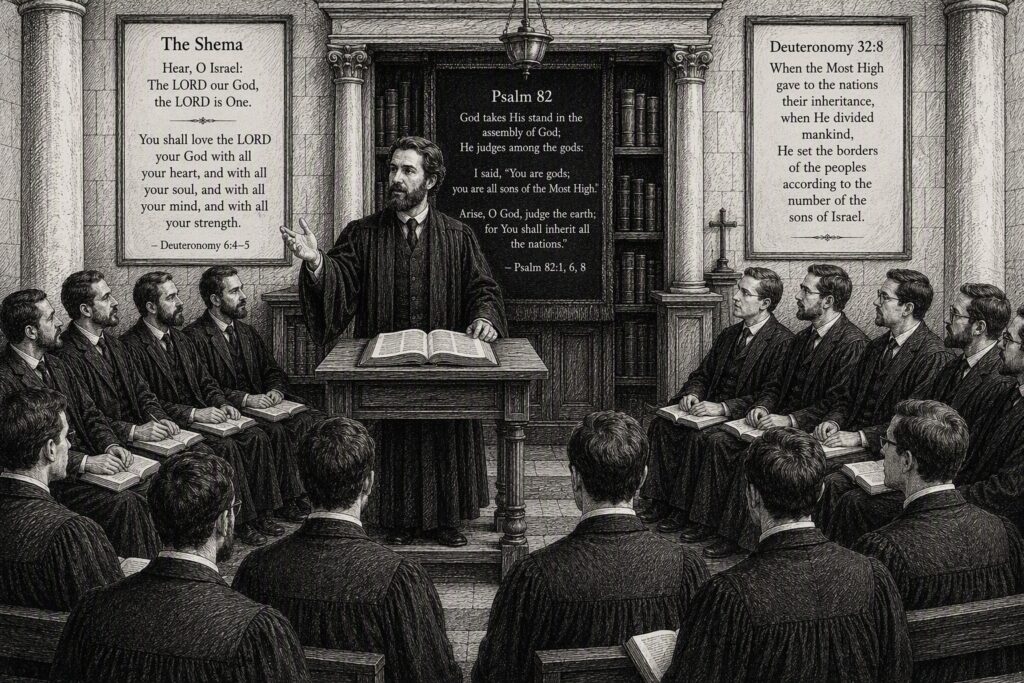
Critics make a similar argument about much of modern Christendom. They point out that while Paul wrote about rulers, authorities, and powers operating in the heavenly realms, many churches today either ignore these passages or explain them mainly as references to human systems and institutions. From the Divine Council perspective, this has caused many Christians to overlook the Bible’s picture of an ongoing spiritual conflict involving both heavenly and earthly powers. Consequently, many believers are unaware of what advocates see as one of the Bible’s major themes: that the conflict between God’s kingdom and rebellious spiritual forces is not merely a past event but an ongoing reality.
Antisemitism and the Seed War
From the Divine Council perspective, both Rabbinic Judaism and much of Christianity have been reluctant to consider that antisemitism, hatred of Jews, and the persistent isolation of Israel among the nations may have a connection to the cosmic conflict described throughout Scripture. Religious leaders often explain antisemitism in psychological, social, political, or historical terms. While those factors are certainly important, supporters of this perspective argue that deeper spiritual forces may also be involved.
In this understanding, hostility directed toward Israel is not merely a human phenomenon but part of a much older conflict that begins in Genesis and continues throughout the Bible. The nations, their rulers, and the spiritual powers connected with them are terrified of Yahweh and Israel.
If the rebellious powers know that their ultimate defeat will come through the fulfillment of God’s plan, then opposition to Israel becomes more than politics; it becomes another front in the ancient seed war. Yet many Jewish and Christian institutions rarely teach this possibility, leaving believers with primarily earthly explanations for events that may also have a spiritual dimension.
Sources
1. Randall Heskett, The Divine Council, in Reading the Book of Isaiah (2011); discussion of the divine council in ancient Israelite religion and later interpretation.
2. Michael S. Heiser, The Unseen Realm; discussions of the divine council, Genesis 6, Deuteronomy 32, Psalm 82, Daniel 10, and the spiritual powers described in Scripture.
Key Biblical Passages: Genesis 6:1-4; Deuteronomy 32:8-9; Psalm 82; Daniel 10; Ephesians 6:12; Colossians 2:15; Revelation 12.