

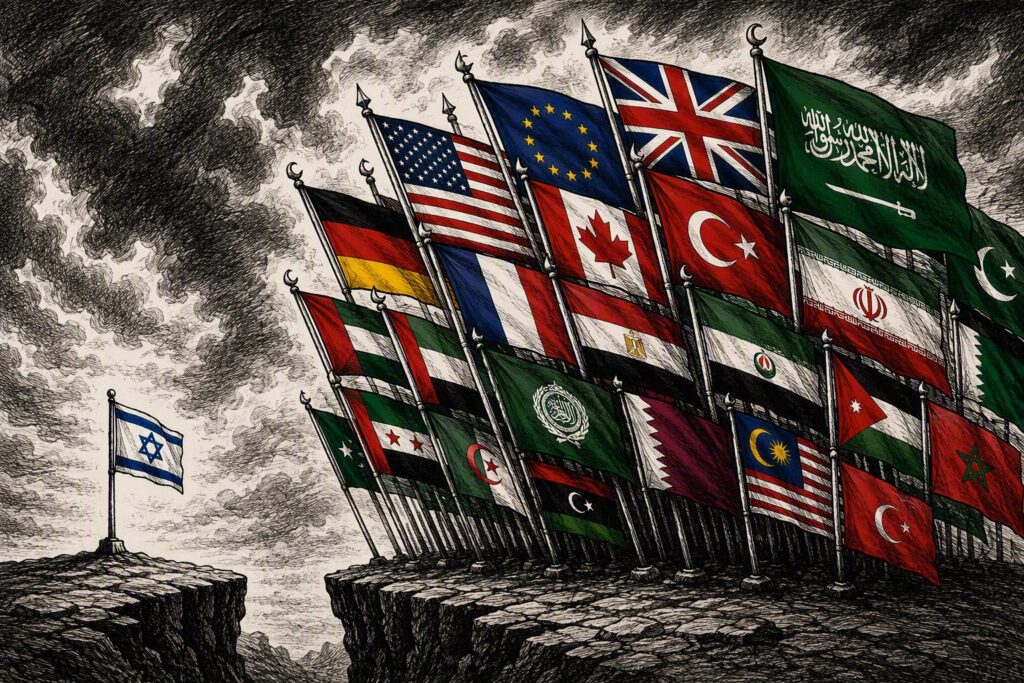
Since Israel declared independence in 1948, it has faced repeated military conflicts with neighboring states, terrorist organizations, and, more recently, Iran itself. A view held by many Israeli scholars, military leaders, and supporters is that while Israel’s allies have generally supported its survival and right to self-defense, they have often worked diplomatically to limit the extent of Israeli victories once battlefield success appeared imminent.
The pattern emerged in the 1948 Arab-Israeli War. Immediately following Israel’s declaration of independence, Egypt, Jordan, Syria, Lebanon, and Iraq attacked the new state. Israel survived and expanded beyond the boundaries proposed by the United Nations partition plan. Yet international diplomacy quickly shifted toward armistice agreements and stabilization rather than allowing further military gains. [britannica.com], [britannica.com]
In the 1956 Suez Crisis, Israel joined Britain and France in a military campaign against Egypt after the nationalization of the Suez Canal. Israeli forces rapidly conquered the Sinai Peninsula, but pressure from both the United States and the Soviet Union compelled Israel and its partners to withdraw. [britannica.com], [en.wikipedia.org]
The 1967 Six-Day War began amid mounting tensions with Egypt, Jordan, and Syria. Israel’s stunning victory placed the Sinai Peninsula, Gaza Strip, West Bank, East Jerusalem, and Golan Heights under Israeli control. The focus of the international community soon turned toward negotiations and the “land for peace” framework embodied in UN Resolution 242. [britannica.com], [britannica.com]
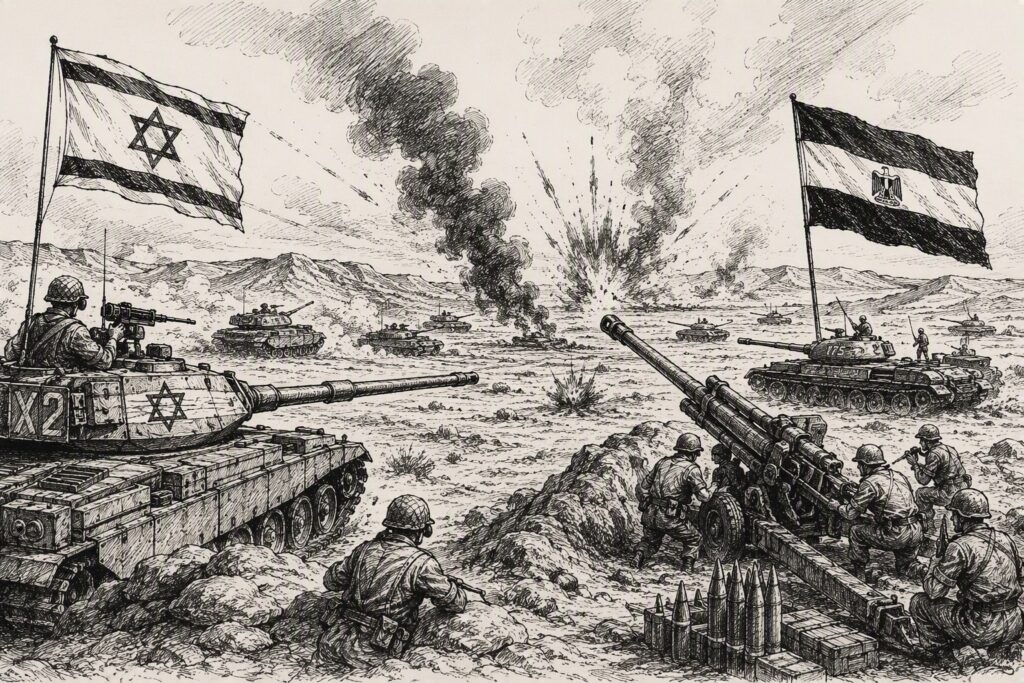
During the 1973 Yom Kippur War, Egypt and Syria launched a surprise attack on the holiest day in the Jewish calendar. Israel eventually regained the initiative and advanced deep into enemy territory. As Israeli forces gained the upper hand, the United States and Soviet Union pushed for a ceasefire to prevent wider escalation. [britannica.com], [britannica.com]
The 1982 Lebanon War was launched to expel the Palestine Liberation Organization from Lebanon after years of attacks on northern Israel. Despite military success, Israel faced growing international pressure, including from Washington, to limit operations and eventually withdraw. [britannica.com], [britannica.com]
In the 2006 Lebanon War, Hezbollah attacked Israel and captured Israeli soldiers. Israel responded with major military operations, but intense diplomatic efforts sought a quick end to hostilities and prevented a broader regional conflict. [britannica.com]
The Israel-Hamas War began on October 7, 2023, when Hamas launched a large-scale attack into Israel, killing civilians and taking hostages. Israel responded with an extensive military campaign aimed at dismantling Hamas and recovering the hostages. As the campaign progressed, international pressure increasingly emphasized ceasefires, humanitarian access, hostage agreements, and limits on military operations. Eventually, diplomatic efforts produced ceasefire arrangements and hostage exchanges. [britannica.com], [britannica.com]
The conflict also expanded into a broader regional struggle involving Iranian-backed groups. Throughout these confrontations, Western allies typically affirmed Israel’s right to defend itself while simultaneously urging caution and restraint to avoid a wider war. [bing.com]
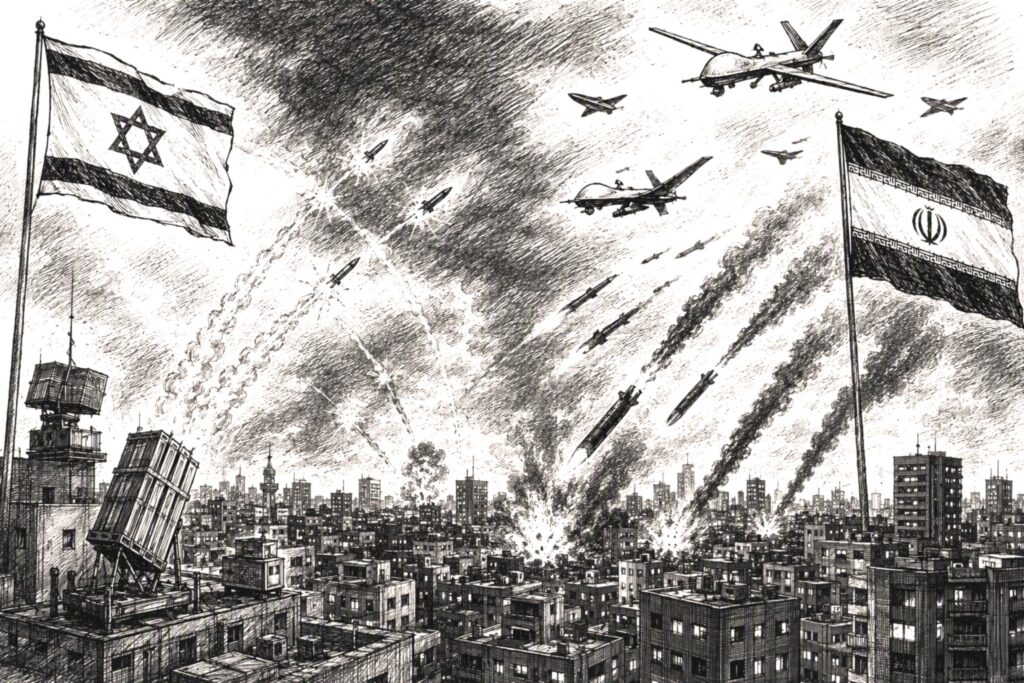
The direct Israel-Iran confrontation of 2025 represented the most dramatic example of this pattern. Following Israeli strikes inside Iran and subsequent Iranian missile attacks, international attention quickly focused on de-escalation and preventing an extended regional war. Diplomatic efforts emphasized ceasefires and containment rather than the expansion of military objectives. [iss.europa.eu]
Whether one agrees with this interpretation or not, a consistent theme can be observed throughout Israel’s history: military victories have frequently been followed by diplomatic efforts from allies and major powers to limit escalation, preserve regional stability, and channel conflict toward negotiated settlements.
The goal of this is to restrain Israel. Why? What are the nations afraid of?
Footnotes
- Encyclopaedia Britannica, “Arab-Israeli Wars,” overview of the 1948-49 War, Suez Crisis, Six-Day War, Yom Kippur War, and later conflicts. [britannica.com], [britannica.com]
- Encyclopaedia Britannica and historical summaries of the Suez Crisis noting Israeli military success and subsequent withdrawal under international pressure. [britannica.com], [en.wikipedia.org]
- Encyclopaedia Britannica, discussion of the Six-Day War and the emergence of the “land for peace” principle through UN Resolution 242. [britannica.com]
- Encyclopaedia Britannica, summary of the Yom Kippur War and the diplomatic process that followed. [britannica.com], [britannica.com]
- Encyclopaedia Britannica, summaries of the 1982 and 2006 Lebanon conflicts. [britannica.com], [britannica.com]
- Encyclopaedia Britannica, “Israel-Hamas War,” describing the October 7, 2023 attack, subsequent Israeli military campaign, international criticism, ceasefire efforts, and hostage agreements. [britannica.com], [britannica.com]
- Encyclopaedia Britannica and related sources discussing the broader regional conflict involving Iranian-backed groups after October 2023. [bing.com], [britannica.com]
- European Union Institute for Security Studies, analysis of the June 2025 Israel-Iran conflict and subsequent international efforts to prevent wider regional escalation. [iss.europa.eu]