

The Scattering of Israel – The Two Meanings of Jezreel
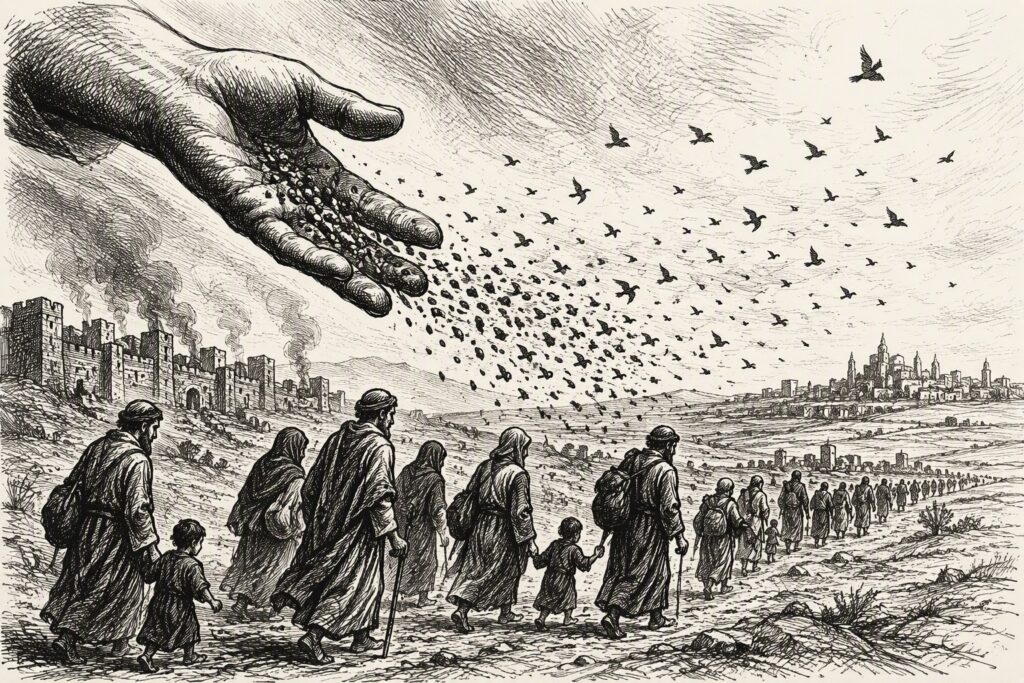
The Book of Hosea presents one of the most profound prophetic names in Scripture: Jezreel. At first, the name speaks of judgment. Yahweh declares that He will scatter Israel because of her covenant unfaithfulness and spiritual adultery. Yet as the prophecy unfolds, the meaning of Jezreel expands beyond judgment into redemption. The same name that signifies “God scatters” also carries the sense of “God sows.” What Yahweh scatters, He does not abandon. Rather, He plants with intention, purpose, and the expectation of a future harvest.
This dual meaning reveals a central theme in Hosea. The dispersion of Israel was not merely punitive. It was a divine strategy through which Yahweh would humble His people, refine them, and use them as instruments to reveal His sovereignty to the nations.
The Scattering of Israel as Divine Discipline
Israel’s exile among the nations was a consequence of abandoning the covenant and pursuing the gods of surrounding peoples. The nation that was chosen to bear Yahweh’s name had increasingly trusted in political alliances, military strength, and the worship of other elohim. Through scattering, Yahweh demonstrated that His covenant blessings could not be presumed upon while disregarding His commands.
The dispersion stripped Israel of national pride and earthly security. Removed from the land and subjected to foreign powers, the people experienced the weight of covenant discipline. Their condition served as a continual reminder that Yahweh is not merely a tribal deity who can be manipulated or ignored. He is the sovereign Lord of history who judges even His own people according to righteousness.
A Humiliated People with a Holy Calling
Yet Israel’s humiliation was never intended to be her destruction. Through exile, Yahweh preserved a remnant and maintained His covenant promises. The Jewish people became living witnesses of both divine judgment and divine faithfulness. Though scattered, they were not consumed. Though disciplined, they were not abandoned.
In this condition Israel occupied a unique place among the nations. Their suffering testified to the reality of Yahweh’s justice, while their preservation testified to His enduring faithfulness. Every generation of Jewish survival became evidence that the God who scattered them also watched over them. Their existence proclaimed that history unfolds according to Yahweh’s purposes rather than the designs of kings and empires.
Jezreel as the Sowing of Truth Among the Nations
The deeper purpose of Jezreel emerges when scattering is understood as sowing. Just as a farmer casts seed across a field, Yahweh dispersed His people throughout the world. Wherever they settled, they carried with them the Scriptures, the knowledge of the Creator, and the memory of His mighty acts.
Through synagogues, the reading of the Law, the preservation of the prophets, and the testimony of their history, Israel became a vehicle through which the nations encountered the truth of Yahweh. The dispersion transformed countless foreign lands into fields where the seed of divine revelation could take root.
What appeared to be defeat became an act of planting. The exile spread the knowledge of the God of Israel far beyond the geographical borders of the promised land.
A Witness Against the Lesser Elohim
The nations surrounding Israel worshiped numerous Elohim, divine powers and gods that promised protection, fertility, prosperity, and military success. Yet these gods proved powerless before the unfolding purposes of Yahweh.
As Israel lived among the nations, their Scriptures declared a radically different message. Yahweh alone created the heavens and the earth. Yahweh alone governs the rise and fall of kingdoms. Yahweh alone judges righteousness and redeems His people. The story of Israel stood as a continual challenge to every competing claim of divine authority.
The irony of the exile was that the nations, while conquering Israel politically, could not silence Israel’s testimony. Instead, the scattered people carried the knowledge of Yahweh into the heart of the very cultures that worshiped lesser powers. Through them, Yahweh demonstrated that He alone directs history and fulfills His word.
The Harvest Beyond the Scattering
Hosea’s vision ultimately points beyond exile to restoration. The God who scatters is also the God who gathers. The seed that is sown is intended to produce a harvest. Israel’s dispersion therefore becomes part of a larger redemptive narrative in which judgment serves mercy and discipline serves restoration.
The prophecy of Jezreel reveals that Yahweh’s purposes are often accomplished through circumstances that appear tragic from a human perspective. Israel was humbled among the nations, yet through that very humiliation Yahweh magnified His name. The scattered people became planted witnesses, carrying the testimony of the one true God into every corner of the world.
The Paradox of Jezreel
Jezreel embodies one of the great paradoxes of biblical theology: judgment that leads to restoration and scattering that becomes sowing. Yahweh dispersed Israel because of covenant unfaithfulness, but He also used that dispersion to advance His redemptive purposes among the nations.
In their humbling, Israel learned dependence upon Yahweh. In their scattering, the nations encountered the knowledge of the God of Israel. Thus the meaning of Jezreel reaches far beyond exile. It is the story of a God who turns judgment into mission, discipline into testimony, and scattered seed into a harvest that proclaims His supremacy above all lesser Elohim.
The Hatred of the Rebel Elohim & Their People
Yet the rebel Elohim despise the seed that Yahweh has planted among the nations. From the biblical perspective reflected in passages such as Deuteronomy 32, Psalm 82, and Daniel 10, the powers that have set themselves against the Most High view Yahweh’s people with hostility because they represent His claim upon the earth. Wherever the seed of Yahweh is scattered, it serves as a reminder that the nations do not belong ultimately to their spiritual rulers but to the Creator who formed all things.
The presence of Israel among the nations is therefore more than a historical reality; it is a living challenge to every throne that stands in rebellion against Yahweh. The scattered people bear the testimony of His covenant, His law, and His sovereignty. Their existence proclaims that history is moving toward the fulfillment of Yahweh’s purposes. For the rebel powers, this testimony is intolerable. It exposes their rebellion and announces the limits of their authority.
Thus the hatred directed toward the instruments of Yahweh is depicted as fierce and relentless. The rebel elohim seek to corrupt what Yahweh intends to sanctify and to destroy what He intends to preserve. Through deception, idolatry, violence, and false worship, they labor to turn the peoples of the nations away from the knowledge of the Most High. They whisper that the covenant people should be despised, forgotten, assimilated, or erased. Their goal is not merely opposition but the extinguishing of Yahweh’s witness among the earth’s kingdoms.
Yet their hostility is mixed with fear. The seed scattered by Yahweh carries within it the promise of a future harvest. What appears weak and vulnerable possesses a purpose beyond the understanding of earthly rulers. The rebel powers recognize, however dimly, that the instruments of Yahweh are part of a divine plan that will ultimately expose every false claim to authority. The covenant people bear witness that the kingdoms of this world are temporary, while the kingdom of the Most High is everlasting.
In this sense, the scattered people become a prophetic army, not primarily through military might, but through their testimony to the truth. They stand as witnesses that Yahweh alone is God and that all authority derives from Him. Every generation that preserves His word, every remnant that remains faithful, and every proclamation of His name advances His purpose in the world. The nations may not always perceive it, but the rebel powers understand the threat. The continued existence of Yahweh’s witnesses proclaims the coming day when deception will be judged, idolatry will fall, and the true King will be acknowledged throughout the earth.
Therefore, the conflict surrounding the seed of Yahweh is presented not merely as a struggle between peoples, but as part of a larger cosmic drama. The rebel elohim rage against the covenant people because they symbolize the certainty of Yahweh’s victory. The scattered seed of Jezreel carries within itself the promise of a harvest, and that harvest points toward the restoration of all things under the righteous rule of the Most High.
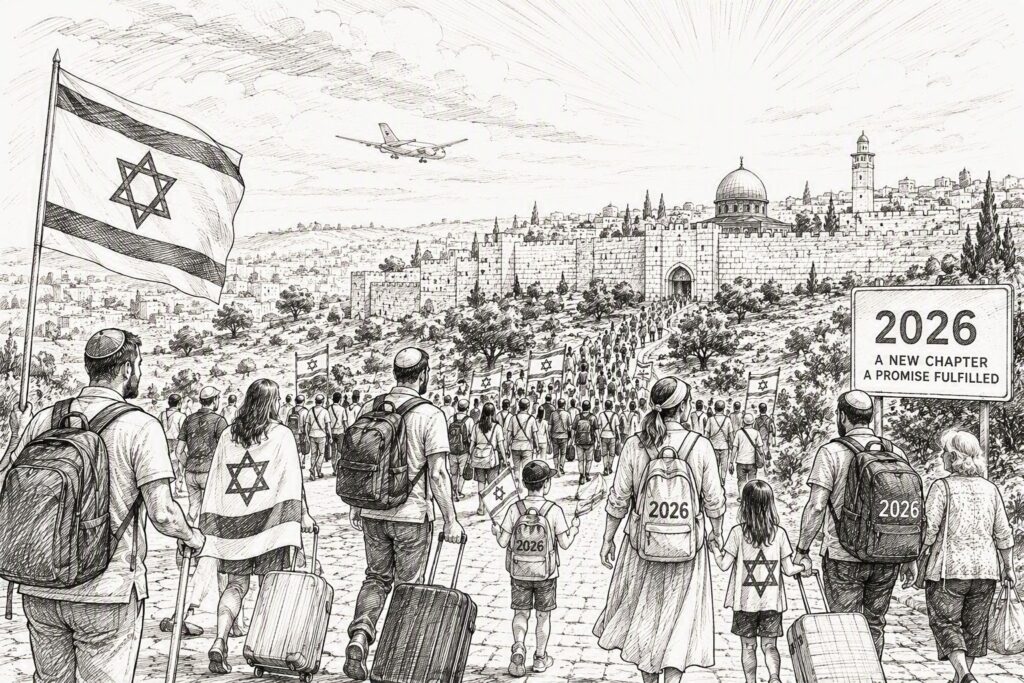
What we are witnessing in the year 2026 is the stage setting… Yahweh is on the move, his scattered seed is being gathered. The lion of Judah is about to roar like never before!
The Gathering of the Scattered Seed
What we are witnessing in the year 2026 may be understood, from a prophetic perspective, as the setting of a stage whose foundations were laid long ago. The name Jezreel speaks first of scattering and then of sowing, but the story is incomplete without the final act: gathering. The seed that Yahweh scattered among the nations was never intended to remain forever dispersed. The hand that cast the seed into the field is the same hand that returns at harvest time.
For centuries the seed of Yahweh has lived among the nations, carrying His name, preserving His testimony, and bearing witness to His covenant. Empires have risen and fallen. Kingdoms have flourished and disappeared. Yet the scattered seed has endured. What appeared to many as weakness was in fact preservation. What looked like exile was preparation. What seemed like abandonment was the unfolding of a purpose greater than human understanding.
From this perspective, the movements of our age can be viewed as more than political, economic, or social developments. They may be seen as part of a larger spiritual drama moving toward its appointed conclusion. The nations continue to rage, and competing powers continue to struggle for influence and control. Yet beneath the visible events of history, the purposes of Yahweh advance steadily toward their fulfillment. The sown seed is beginning to hear the voice of the Sower.
The Awakening of Identity
The gathering begins with remembrance.
Before a people are gathered physically, they are gathered spiritually. Before they return, they awaken. Yahweh calls His scattered ones to remember who they are, whose they are, and why they were placed among the nations in the first place. The long season of scattering gives way to a season of recognition. The forgotten covenant is remembered. Ancient promises regain their meaning. The call of Yahweh begins to cut through the noise of the nations.
This awakening is not merely an act of ethnic remembrance but a return to the authority and sovereignty of the Most High. The scattered seed begins to discern the difference between the voice of Yahweh and the many competing voices that have sought to claim their allegiance. The harvest starts when the planted seed recognizes the hand of the One who planted it.
A Sign to the Nations
The gathering of the scattered seed serves as a testimony before all peoples. Just as the scattering revealed Yahweh’s judgment, the gathering reveals His faithfulness. The nations witness that the promises of Yahweh are not forgotten and that His purposes cannot be overturned by the passage of time.
Those powers that oppose the purposes of the Most High may seek to resist this work, but the gathering itself becomes a declaration that Yahweh remains sovereign over the earth. The same God who scattered can gather. The same God who disciplined can restore. The same God who planted can reap.
In this way, the restoration of the scattered seed becomes a lesson to every nation. It proclaims that history is not moving aimlessly but toward the fulfillment of divine purposes. The kingdoms of men are temporary, but the will of Yahweh endures forever.
The Harvest of Jezreel
Jezreel therefore contains the entire story: scattering, sowing, and gathering. The field has been planted for generations. The seed has endured storms, droughts, and attacks from every side. Yet the seed survives because Yahweh Himself watches over it.
If the season is indeed turning toward gathering, then what we are witnessing is not the end of the story but the beginning of the harvest. The One who scattered His people among the nations is also the One who calls them home. The scattered seed of Yahweh becomes a gathered people, and the purpose of the planting is finally revealed.
For the harvest of Jezreel is not merely about the restoration of a people. It is about the vindication of the name of Yahweh before all nations, demonstrating that the Most High remains faithful to His word, steadfast in His covenant, and sovereign over all creation.
The reign of the Rebel gods of old is rising to fight the army of Yahweh. The final battle is about to be fought. The gods and the human nations they rule is coming to an end and it terrifies them.