

What do I Study?
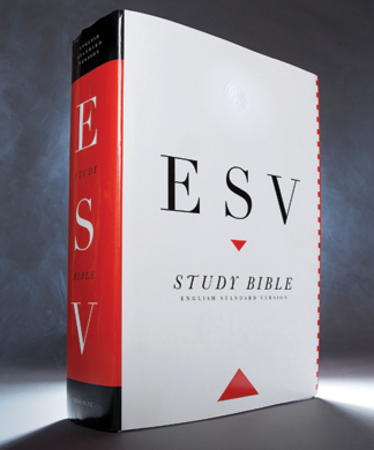
Q. How do you decide what to study in the Bible? How do you get started? I don’t even know where to begin. But I want to learn.
Answer:
Along with the subject of which translation to use, we find that what to study and how to study the Bible is a popular subject, too. There are many ways to study, and almost every good teacher has a book or series of tapes on their particular method of what and how to study.
Why Study?
Bible study, devotions, and prayer are among the most important things you can do in your Christian walk. This is because we live in a world ruled by Satan (1 John 5:19, John 14:30), in bodies of flesh ruled by sin (Ro. 3:10-18, 5:12).
Therefore, we need to constantly renew our minds and take every thought captive to Christ to counter negative forces within us and the evil forces out there (Romans 12:1, 2 Cor. 10:5). We need to replace man’s thoughts with God’s thoughts. Of course, this is a full time job.

- Church, Sunday School, & Home Bible Studies
On the subject of what to study, let’s start with your church. Many churches such as Calvary Chapel work through the Bible verse by verse, week by week. This is a valuable method because it prevents members from getting stuck on certain subjects or from picking and choosing from various books or passages of the bible.
If your pastor works thematically (giving sermons on different subjects), that’s okay, too. Get printed copies or tapes of his sermons and study the biblical references weekly. Secondly, look to your Sunday School classes or home bible studies for guidance on a systematic way to study through the bible.
- Personal Problems
Another area ripe for study is ourselves. Do you have a stubborn personal problem? This can provide you with a topical study as you discover what the Bible says about your problem.
Maybe you are finding it difficult to forgive a family member who has hurt you deeply, for example. Here are some steps to seek God’s wisdom on this subject.
Use a Concordance
Use your Strong’s Concordance to look up the word “forgiveness.” Write in a notebook the relevant passages from the Old and New Testament having to do with forgiveness. Carefully read those passages which most closely parallel your own experiences or needs. If you use a good study bible, note what it says about these passages of Scripture, too.
Consult Dictionaries
Look up forgiveness in a common dictionary. Then look up this word from a Greek and Hebrew Bible dictionary, or from Vine’s Expository Dictionary. Note the meanings from these sources.
Journal
Next, write down what you have discovered from dictionaries and the Bible in a personal journal. (A blank notebook is fine for this purpose).
Memorize Key Verses
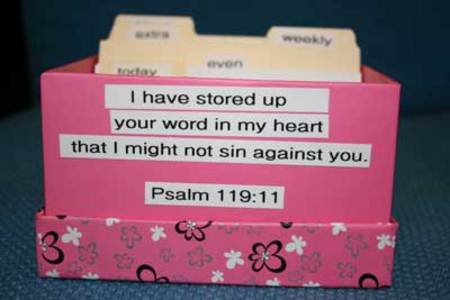
Finally, undertake to memorize any Scripture verses which speak to your heart so that they will become a permanent part of your mind and emotions.
Write these verses in your journal. Then we suggest you write these verses on blank business cards. Tape them to your refrigerator, the bathroom mirror, and keep some in your wallet for those moments you are caught waiting without anything to do. This is a wonderful way to redeem the time.
- Book by Book
Many Bible teachers also recommend going through the Bible book by book. Among them are John MacArthur and Kay Arthur. The order of the books doesn’t really matter – you could choose a New Testament book one time and an Old Testament book another.
Use a Commentary
We suggest you start by purchasing a commentary on the particular book you are studying. John MacArthur offers unsurpassed book commentaries, and Dr. Missler offers unbeatable tapes.
Read one chapter from your Bible and then read what the book commentary says. This will provide for a more detailed study of each verse than those provided in study bibles. Remember to keep a journal to write down what you have learned.
Bibles
Finally, Harvest House offers a Bible called The New Inductive Study Bible in the NASB translation. This Bible leaves margin space for personal notes, and contains background information about each book and study questions or charts to fill out at the beginning and end of each book. Very helpful. This is a ready made bible workbook.
If you cannot afford a new Bible, a separate paperback book containing the same information and questions is now available. It is called: Discover the Bible for Yourself, Kay Arthur (Eugene, OR: Harvest House, 2000).
Students may also purchase bibles with lots of margin space for personal notes. A favorite commentary used alongside your own notes in a wide-margin bible provides almost the same thing as the Inductive Study Bible.
- Last, there are wonderful study guides and programs available for learning to study the Bible. Here are some of our favorites:
Kay Arthur, Precept Ministries International, P.O. BOX 182218, Chattanooga, TN 37422-9901. Precept Upon Precept (PUP) studies, inductive studies, books, tapes and bibles. www.precept.org. 1-800-763-8280
John MacArthur, How To Study the Bible, Grace to You Ministries, P.O. BOX 4000, Panorama City, CA 91412, books, tapes, and bibles. www.gty.org. 1-800-55-GRACE
Joyce Meyer, How to Study the Bible, Joyce Meyer Ministries, P.O. BOX 655, Fenton, MO 63026. Great tapes on relationship issues. www.joycemeyer.org. 1-800-727-9673
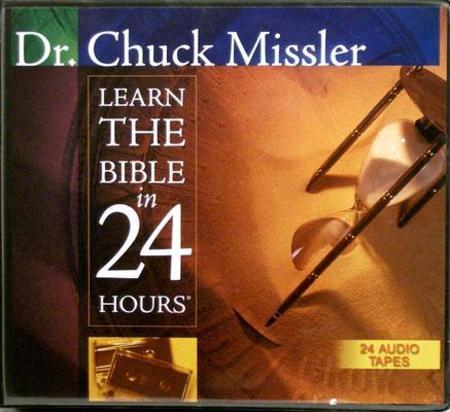
Chuck Missler, Learn the Bible in 24 Hours. P.O. BOX D, Coeur d’Alene, ID, 83816-0347. Books, tapes, videos, bibles. Available from: www.khouse.org. 1-800-KHOUSE-1
Finally, remember to check your local Christian bookstore for special book study- guides and bible study workbooks, too. But, don’t pile so much work on yourself that you forget to love and worship the God who redeemed you.
Maranatha!