

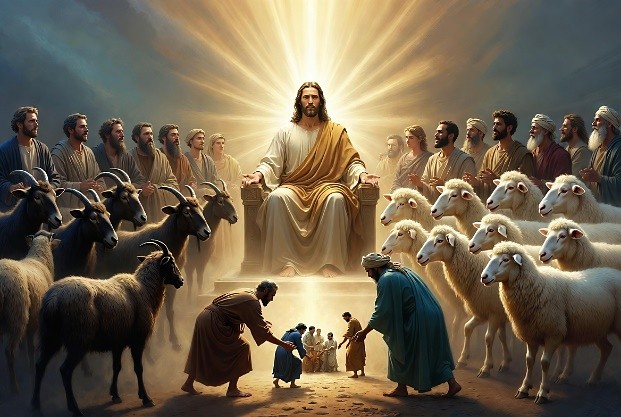
We asked GROK to give us a summary of the Dispensational view on the Sheep and Goats Judgement. Here is what GROK said… Key theologian holding this view primarily from dispensation premillennial eschatology, which emphasizes a literal future Tribulation, Second Coming, and Millennial Kingdom. This interpretation sees Matthew 25:31-46 (the Sheep and Goats judgment) as a judgment of Gentile survivors of the Tribulation, based on their treatment of Jesus’ “brethren”—identified as Jewish people (often believing Jewish remnants or the Jewish nation) persecuted during that period.
Prominent Theologians
- John F. Walvoord (prominent Dallas Theological Seminary figure, dispensationalist): He explicitly taught that “all nations” (Greek ethne, often meaning Gentiles) refers to non-Jewish people gathered after Christ’s return. The “brethren” are Jewish, distinguished from both sheep and goats. Sheep (Gentiles who helped persecuted Jews) enter the Millennial Kingdom; goats (those who did not) face judgment. This fits the Tribulation context of intense persecution of Jews.
- J. Dwight Pentecost (Dallas Theological Seminary, author of Things to Come): He described this as a judgment of living Gentiles who survive the Tribulation (not resurrected dead). It determines entry into the Messianic Kingdom based on their response to Jews during “Jacob’s trouble.”)
- Other associated figures: Ron Rhodes, contributors to Israel My Glory (Friends of Israel Gospel Ministry), and similar dispensational writers like those referencing Tim LaHaye’s circles. This view is common in classic dispensationalism and some Messianic or pro-Israel evangelical teachings.
This is not the majority historical or mainstream Christian interpretation (many see it as a general judgment based on treatment of all needy/disciples, or a final judgment). It is distinctive to certain futurist, premillennial dispensational frameworks.
Why They Believe This
These theologians base their view on contextual, linguistic, and theological reasoning tied to their eschatological system:
- Timing and Context in the Olivet Discourse: Matthew 24–25 discusses end-times events, including the Tribulation, abomination of desolation, and Christ’s glorious return. This judgment occurs immediately after the Second Coming, when nations are gathered before Christ’s throne for Kingdom entry—not a general or final judgment of all humanity.
- “Nations” (Ethne) as Gentiles: The Greek term often distinguishes non-Jews. In a Jewish Gospel like Matthew, this points to Gentile survivors of the Tribulation being judged separately from Jews.
- “My Brethren” as Jews: Jesus’ “least of these my brethren” are seen as His Jewish kinsmen. During the Tribulation, surviving Jews will be aided or abandoned. Helping them demonstrates faith in the Jewish Messiah.
- Basis of Judgment and Kingdom Entry: Sheep inherit the Kingdom for their works (risky aid to persecuted Jews, showing genuine faith). This determines who populates the Millennial Kingdom alongside surviving Jews.
- Harmonization with Prophecy: Links to Zechariah 14, Old Testament Gentile treatment of Israel, and dispensational distinctions between Israel and the Church.
This view underscores God’s faithfulness to Israel and warns nations about end-times alignment. For deeper reading, consult Walvoord’s or Pentecost’s works on prophecy.