

Introduction
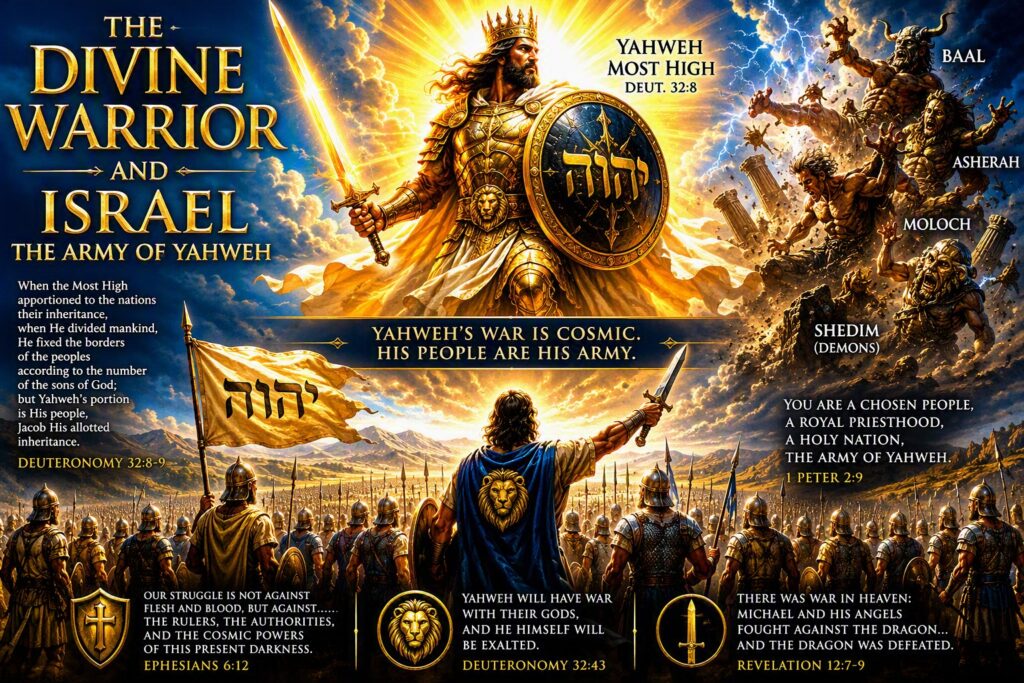
Patrick D. Miller’s The Divine Warrior in Early Israel remains one of the most influential studies of warfare imagery in the Hebrew Bible. Miller argues that ancient Israel understood its history, identity, and military struggles through the conviction that Yahweh was a Divine Warrior who fought on behalf of his people. The wars of Israel were not viewed merely as political or military events. They were interpreted as manifestations of divine warfare in which Yahweh himself was the true combatant and Israel participated as his earthly force.^1 They were in fact “The wars of Yahweh.”
Yahweh as the Divine Warrior
According to Miller, the image of Yahweh as a warrior stands at the center of many of Israel’s oldest traditions. The classic biblical expression of this belief appears in Exodus 15:3: “Yahweh is a warrior.” From the Song of the Sea onward, Israel celebrated God’s victory over hostile powers as the foundational act that created and sustained the nation.
Miller traces this motif to a broader ancient Near Eastern context, where deities were portrayed as victorious warriors who defeated cosmic enemies and established order. Yet Israel transformed these traditions by placing Yahweh alone at the center of history and warfare. The Divine Warrior was not merely one god among many. He was the sovereign Lord who marched from Sinai, shook the mountains, controlled the forces of nature, and defeated both cosmic and human enemies.^2
Terror and Dread of Israel a Weapon of Yahweh
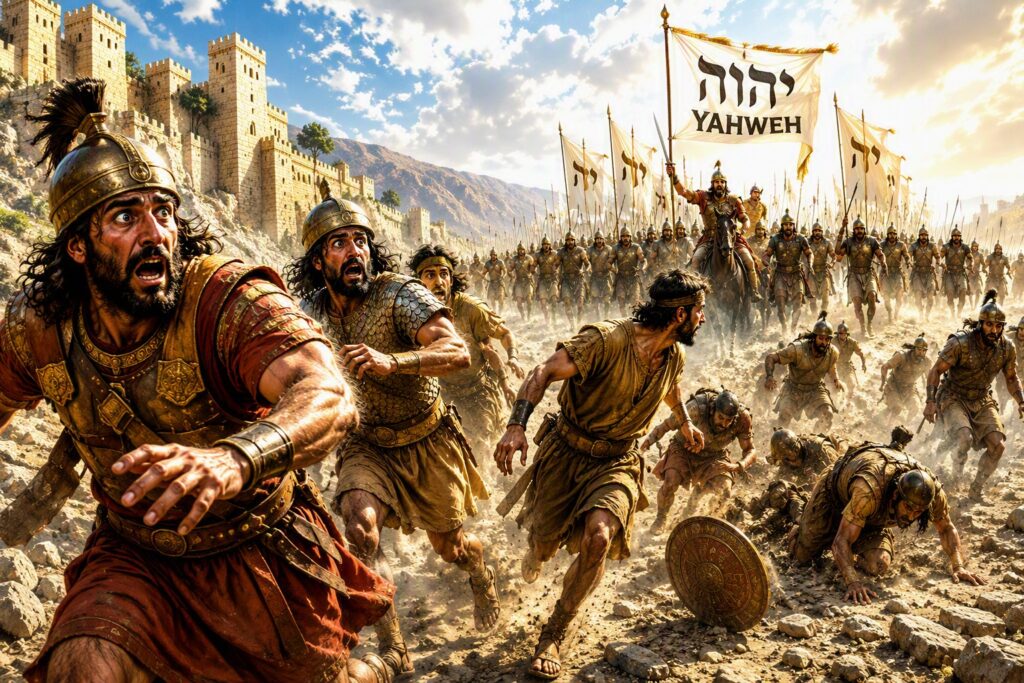
A significant aspect of Yahweh’s warfare was the use of terror as a weapon of judgment and conquest. Enemy armies often experienced panic, confusion, and psychological collapse before physical defeat occurred. The fear inspired by Yahweh’s approach reflected the conviction that divine judgment was at hand. Likewise, the reputation of Yahweh’s victories and the advance of his people generated dread among surrounding nations. Reports of Yahweh’s power weakened resistance and demonstrated that victory depended not merely upon military force but upon the overwhelming presence of the Divine Warrior. Thus, terror became an instrument of divine warfare through which Yahweh subdued his enemies advanced his army (i.e. Israel) and magnified his sovereignty.^3
Israel as the Army of Yahweh
A key feature of Miller’s work is the relationship between divine warfare and Israel’s military campaigns. Israel’s armies were frequently understood as the earthly extension of Yahweh’s heavenly host. The nation was not envisioned as an independent military power pursuing its own objectives. Rather, Israel functioned as the people summoned to participate in Yahweh’s wars.^4
This perspective explains many of the distinctive features of biblical holy war traditions. Ritual purity, divine consultation, sacred objects, and obedience to God’s commands were often considered more important than military strength. Success depended on Yahweh’s presence. Disobedience could lead to defeat even when Israel possessed superior numbers.
Miller argues that these traditions reveal a profound theological conviction: Israel’s battles belonged to Yahweh. The nation’s role was fundamentally one of trust and obedience. Soldiers fought, but victory was God’s gift. Human warriors participated in a conflict directed by the Divine Warrior himself.^5
Cosmic War and Historical War
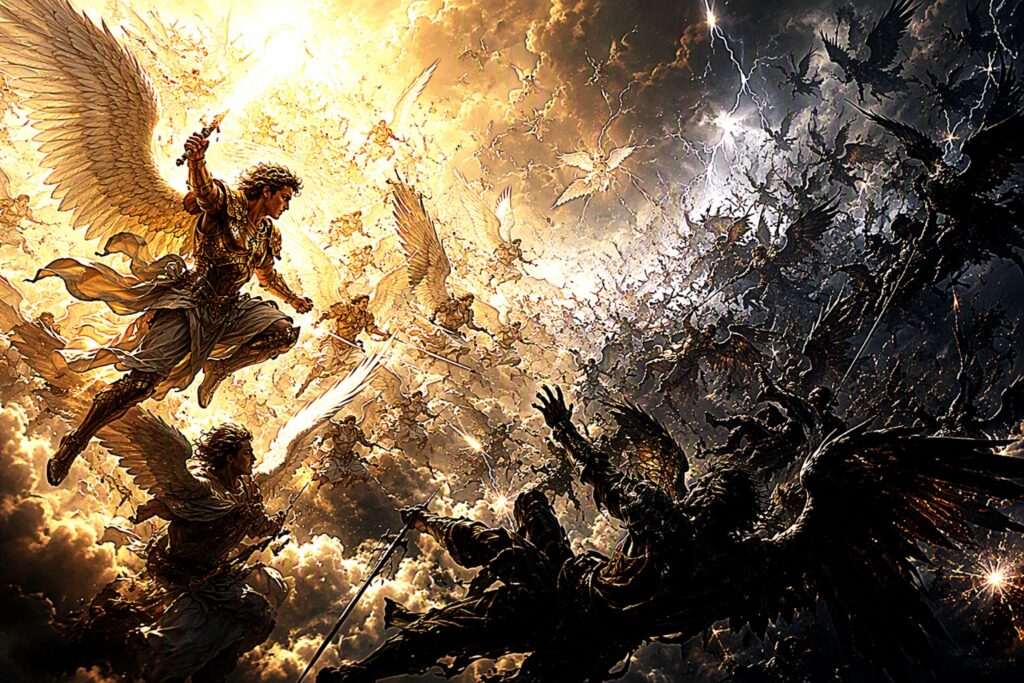
One of Miller’s most important contributions is his connection between cosmic warfare and Israel’s historical conflicts. His work examines both cosmic war and holy war as interconnected dimensions of Israel’s theological mindset. The same Yahweh who subdued primordial chaos and established order was to act in Israel’s historical struggles. ^6
Battles against foreign enemies reflected a larger theological reality: God’s ongoing victory over supernatural forces that threatened his purposes in the physical world. Thus, Divine Warrior imagery transcended military conflict and expressed Israel’s faith in God’s ultimate sovereignty. Political and military events became visible manifestations of cosmic truths.
Theological Significance
For Miller, the Divine Warrior motif cannot be dismissed as ancient military propaganda. It was a foundational theological concept that shaped Israel’s understanding of God, covenant, kingship, worship, and national identity. The conviction that Yahweh fought for or against his people appears throughout Israel’s traditions, archeological discoveries, and correspondence in ancient documents stands at the center of its history.^7
The image of Yahweh as the Divine Warrior therefore served multiple purposes. It explained Israel’s victories, warned against covenant rebellion, inspired worship, and affirmed that history remained under divine control. Israel’s army was not ultimately its own. It was the instrument of the God who fought for his people and established his rule through acts of deliverance and judgment.
Conclusion – What We Call Antisemitism, is actually the hatred and terror of Yahweh
Patrick Miller viewed Deuteronomy 32 as a vision of Yahweh’s cosmic war against the gods and powers behind the nations. Yahweh defeats rival deities associated with idolatry, including Baal and the shedim (“demons”) to whom Israel sacrificed (Deut. 32:17), demonstrating that no other god can rival his rule. Through this divine conflict, Yahweh vindicates Israel, judges nations, and establishes his sovereignty over heaven and earth.
This theme continues in the New Testament, where Paul teaches that believers struggle not merely against human enemies but against “the rulers, the authorities, and the cosmic powers of this present darkness” (Eph. 6:12). The conflict reaches its climactic expression in Revelation, where “there was war in heaven.” When the Archangel of Israel Michael and his angels will fight against the dragon and his angels (Rev. 12:7-9), portraying the final defeat of rebellious spiritual powers under God’s reign.
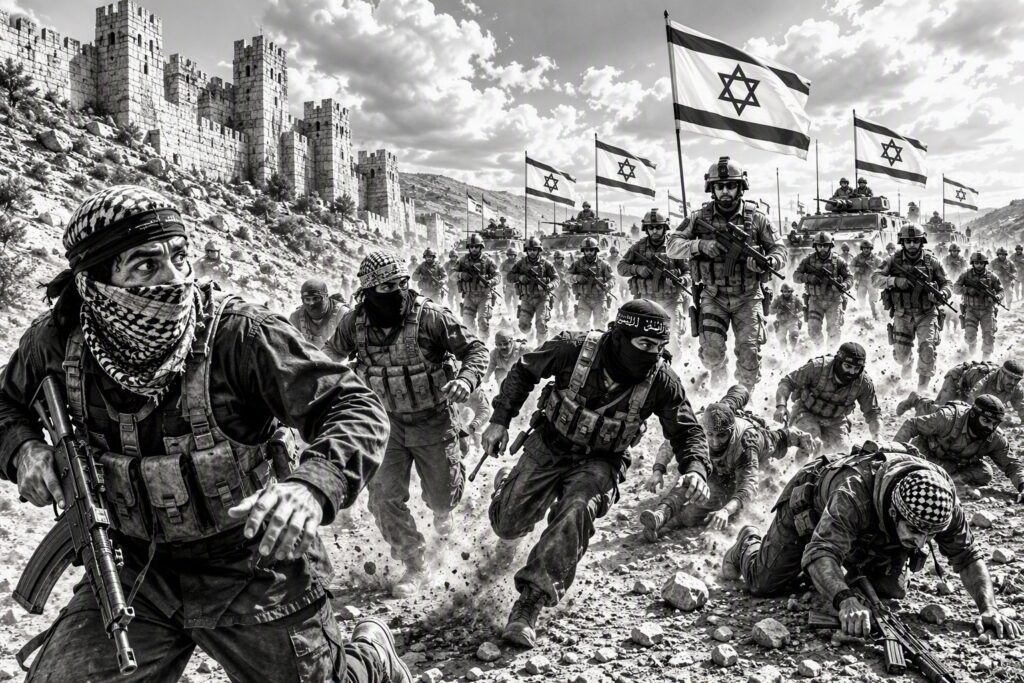
This book advances the proposition that in 1948 Israel was established as an independent nation once more. The reality of its existence is evidential of the promises of the future Davidic Kingdom with Messiah Jesus on the throne. This proposition, we believe strikes terror into the hearts of the enemies of Yahweh and those who are ruled by the powers and principalities of this world.
Footnotes
1. Patrick D. Miller Jr., The Divine Warrior in Early Israel, Harvard Semitic Monographs 5 (Cambridge, MA: Harvard University Press, 1973), Introduction. See also Society of Biblical Literature, description of The Divine Warrior in Early Israel. [cart.sbl-site.org], [books.google.com]
2. Miller, The Divine Warrior in Early Israel, especially discussions of divine warfare traditions, theophany, Sinai traditions, and Yahweh’s role as warrior. [books.google.com], [books.google.com]
3. Miller’s treatment of divine warfare emphasizes Yahweh as the decisive agent in battle and includes motifs of panic, fear, and supernatural disruption among enemy forces. See Miller, The Divine Warrior in Early Israel. [books.google.com], [cart.sbl-site.org]
4. Miller, The Divine Warrior in Early Israel, discussions of holy war, heavenly hosts, and Israel’s participation in the wars of Yahweh. [cart.sbl-site.org], [books.google.com]
5. Ibid. Miller repeatedly emphasizes that victory derives from Yahweh’s action rather than Israel’s inherent military power. [cart.sbl-site.org]
6. Miller, The Divine Warrior in Early Israel, sections titled “Cosmic War and Holy War in Israel.” [books.google.com], [books.google.com]
7. Society of Biblical Literature, description of Miller’s monograph, which notes that the conception of God as warrior played a fundamental role in Israel’s religious and military experience and that the “wars of Yahweh” occupy a central place in Israel’s traditions. [cart.sbl-site.org]
Bibliography
Miller, Patrick D., Jr. The Divine Warrior in Early Israel. Harvard Semitic Monographs 5. Cambridge, MA: Harvard University Press, 1973.
Society of Biblical Literature. The Divine Warrior in Early Israel. Book description and publication information. [cart.sbl-site.org]